
Summary
A capital gain generally arises when you sell or are considered to have sold capital property for more than its adjusted cost base and selling costs.
In Canada, capital gains are not taxed separately. The taxable portion is included in your income and taxed at your marginal tax rate.
CRA requires taxable capital gains to be reported on your personal tax return, generally on line 12700, when taxable capital gains exceed allowable capital losses for the year.
Capital gains planning is important for investments, rental properties, cottages, private company shares, principal residences, and estate planning.
Capital Gains Tax Is Often Misunderstood
Many Canadians refer to “capital gains tax” as if it is a separate tax. In reality, Canada does not have a standalone capital gains tax for individuals.
Instead, when you realize a capital gain, the taxable portion of that gain is included in your income for the year. That taxable amount is then taxed at your regular marginal tax rate.
This means the actual tax cost depends on several factors, including:
- The size of the gain
- Your other income for the year
- Your province or territory of residence
- Whether you have capital losses
- Whether an exemption or deduction applies
- Whether the property was personally owned, corporately owned, or held in a trust
What Is a Capital Gain?
A capital gain generally occurs when you sell, transfer, or are considered to have disposed of capital property for more than its tax cost.
Common examples of capital property include:
- Public company shares
- Mutual funds and exchange-traded funds
- Rental properties
- Cottages and vacation homes
- Land
- Cryptocurrency, depending on the facts
- Shares of a private corporation
- Certain foreign investments
A capital gain is generally calculated as:
- Proceeds of disposition
- minus adjusted cost base
- minus selling costs
- equals capital gain
For example, if you bought shares for $40,000 and later sold them for $70,000 with $500 of selling costs, your capital gain would generally be:
$70,000 – $40,000 – $500 = $29,500
The taxable portion of that gain is then included in income.
What Is the Adjusted Cost Base?
The adjusted cost base, often called ACB, is generally your tax cost of the property.
For investments, this usually starts with the purchase price. However, the adjusted cost base can change over time.
For example, it may be affected by:
- Additional purchases of the same investment
- Reinvested distributions
- Return of capital
- Certain transaction costs
- Foreign exchange changes for foreign investments
- Adjustments from prior tax reporting
Getting the adjusted cost base right is important. Many capital gains errors happen because the taxpayer uses the original purchase price without considering later adjustments.
How Are Capital Gains Taxed in Canada?
Only the taxable portion of a capital gain is included in income.
CRA requires individuals to report taxable capital gains where taxable capital gains for the year exceed allowable capital losses. This amount is reported on line 12700 of the personal income tax return.
For many common situations, taxpayers use Schedule 3, Capital Gains or Losses, to calculate and report capital gains and losses. CRA’s guidance notes that Schedule 3 is used to report capital gains or losses and calculate the amount that flows to line 12700.
Simple Example
Assume you realize a capital gain of $50,000.
If 50% of the gain is taxable, then:
- Capital gain: $50,000
- Taxable capital gain: $25,000
The $25,000 taxable capital gain is added to your income and taxed at your marginal tax rate.
Capital Gains Are Taxed When They Are Realized
In most cases, a capital gain is taxed when the property is sold or otherwise disposed of.
A capital gain is not usually taxed just because an investment increased in value while you still own it. That is an unrealized gain.
However, Canada also has rules that can create a deemed disposition, meaning you are treated as if you sold the property even though there may not have been an actual sale.
Deemed dispositions can arise in situations such as:
- Death
- Emigration from Canada
- Certain transfers
- Certain changes in use of property
- Certain trust events
These rules can be significant because they may create a tax liability without an actual cash sale.
What About Capital Losses?
A capital loss generally occurs when you dispose of capital property for less than its adjusted cost base and selling costs.
Generally, capital losses are important because they can generally be used to offset capital gains, subject to specific rules.
Common examples include:
- Selling investments at a loss
- Disposing of certain securities below cost
- Realizing losses on certain investment property
CRA guidance notes that if your capital gains and losses result in a negative amount, you do not report a negative amount on line 12700. Instead, CRA records the loss and reflects it in your notice of assessment.
Capital loss planning should be handled carefully, especially where superficial loss rules, affiliated persons, or corporate-owned investments are involved.
Do You Pay Capital Gains Tax on Your Principal Residence?
A principal residence may qualify for the principal residence exemption, which can reduce or eliminate the capital gain on the sale of a home.
CRA notes that if a property was solely your principal residence for every year you owned it, you generally do not have to pay tax on the gain. However, if the property was not your principal residence for the entire ownership period, the exemption may not shelter the full gain.
You can generally designate only one property as your family’s principal residence for a particular year.
Important point: even if the principal residence exemption eliminates the tax, the sale of a principal residence generally still needs to be reported.
Common Capital Gains Situations
Capital gains issues often arise when taxpayers deal with:
- Selling a non-registered investment portfolio
- Selling a rental property
- Selling a cottage or vacation home
- Transferring property to family members
- Selling private company shares
- Selling cryptocurrency
- Moving into or out of Canada
- Changing a property from personal use to rental use
- Estate planning or death of a taxpayer
Each situation can have different tax results.
For example, selling a rental property may involve both a capital gain and possible recapture of depreciation if capital cost allowance was previously claimed. Selling a principal residence may involve the principal residence exemption. Selling qualified small business corporation shares may raise lifetime capital gains exemption planning.
Common Mistakes
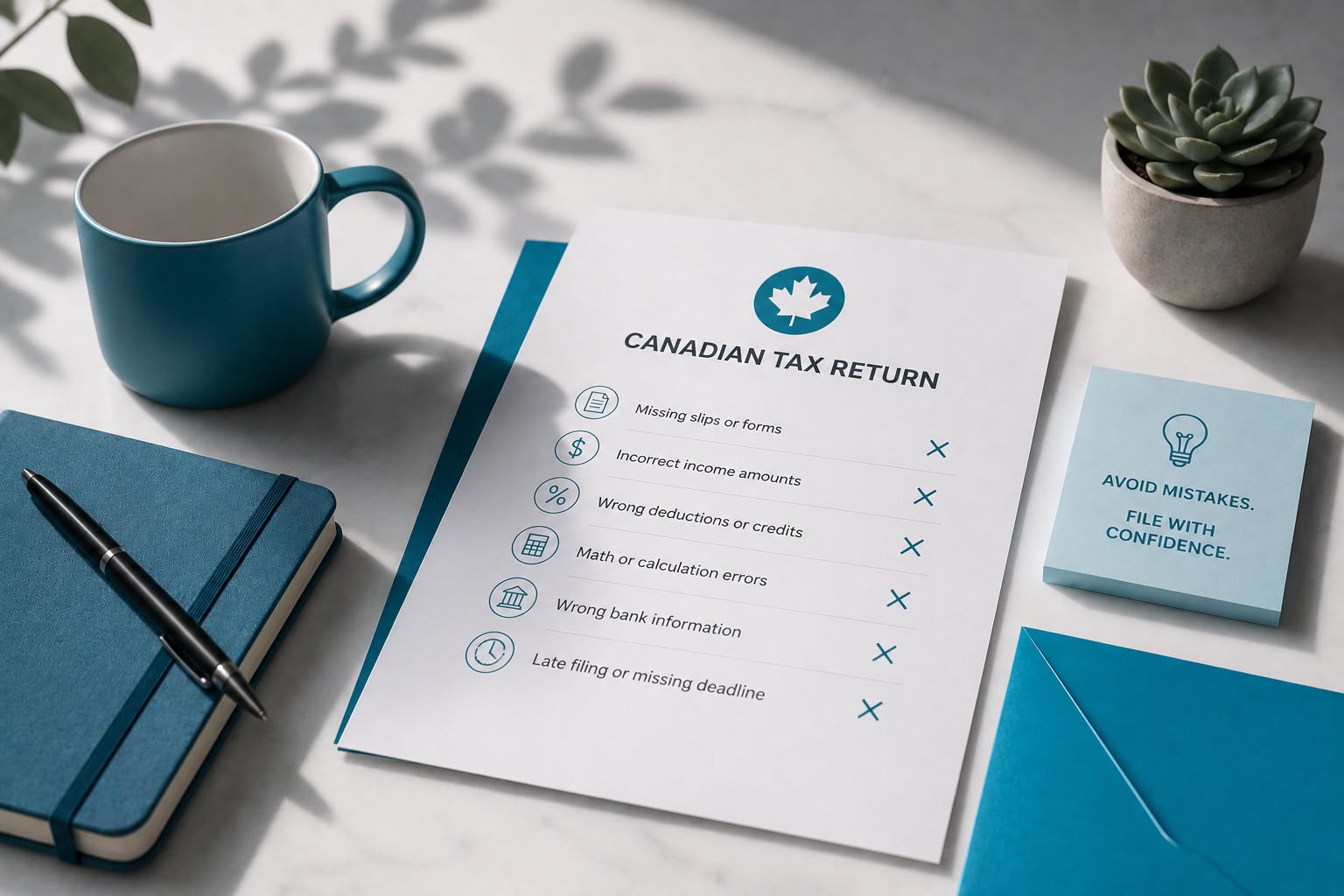
Common capital gains mistakes include:
- Assuming only cash proceeds matter
- Using the wrong adjusted cost base
- Forgetting selling costs
- Ignoring reinvested distributions
- Not tracking foreign exchange on US or foreign investments
- Assuming every home sale is automatically tax-free
- Missing the reporting requirement for a principal residence sale
- Not reviewing capital losses before year-end
- Selling assets without considering income level for the year
- Waiting until tax filing season to calculate large gains
These mistakes can lead to overpaying tax, underreporting income, or missing planning opportunities.
Final Thoughts
Capital gains tax in Canada is not a separate tax. Instead, the taxable portion of a capital gain is included in your income and taxed at your marginal rate.
For simple investment sales, the calculation may be straightforward. For real estate, private company shares, foreign investments, estates, trusts, or cross-border situations, the analysis can become more complex.
If you are planning to sell an investment, property, or business interest, Confectus can help you estimate the tax impact, review planning opportunities, and avoid common reporting mistakes.
Canadian tax questions? Get expert guidance.
Whether you’re an individual, self-employed, or a business owner, we provide clear advice to help you make informed tax decisions.

This article is intended for general informational purposes only and does not constitute tax, accounting, legal, financial, or professional advice. The information may not apply to your specific situation, and rules or guidance may change over time. You should consult a qualified professional advisor before making decisions or taking action based on this information.