Summary
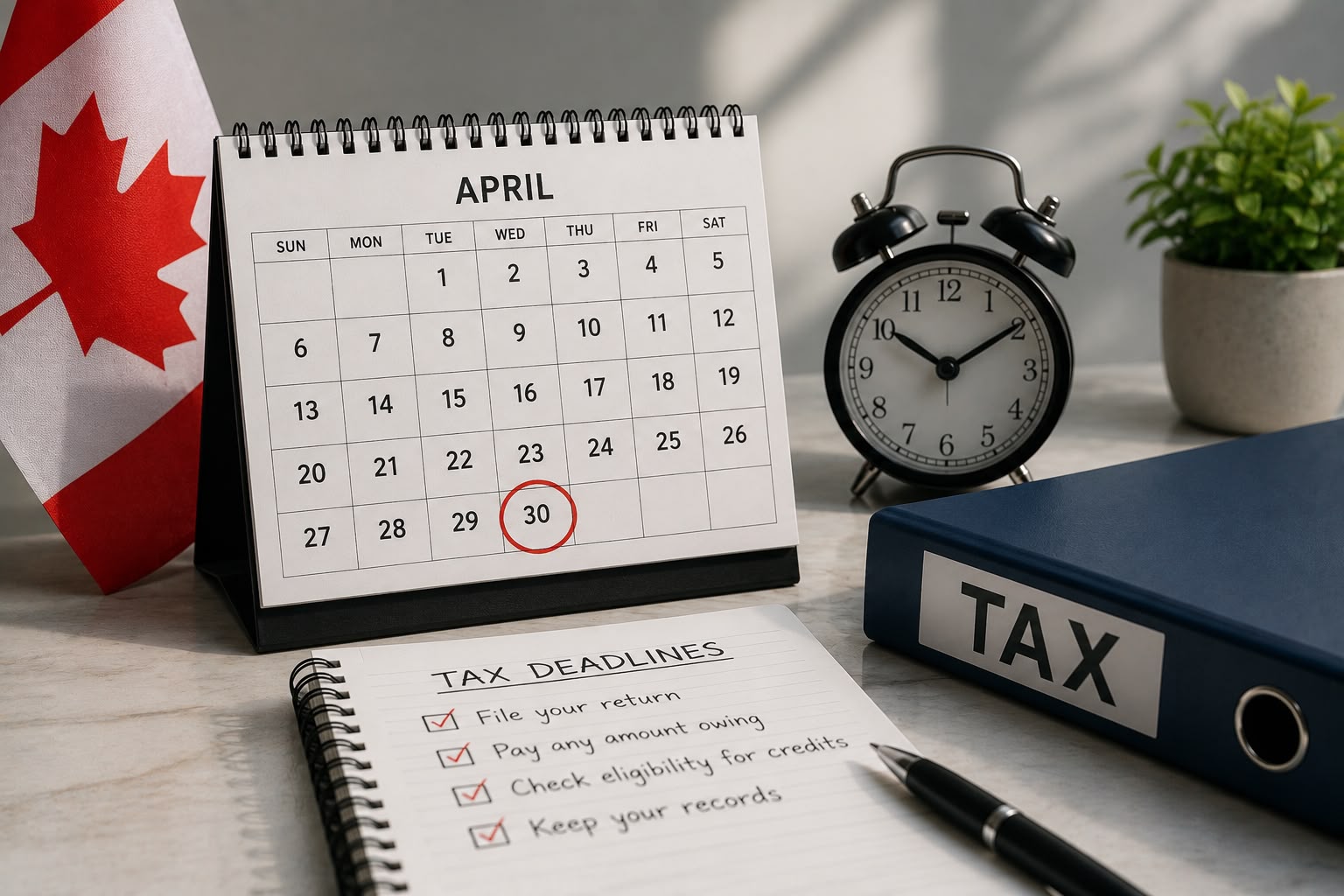
Most individuals must file their personal tax return and pay any balance owing by April 30 for the prior tax year.
Self-employed individuals generally have until June 15 to file, but any balance owing is still due by April 30.
Corporations generally must file their T2 corporate tax return within six months after their fiscal year-end, while the balance owing may be due earlier.
Missing tax deadlines can lead to interest, penalties, and avoidable stress, so it is important to track filing, payment, payroll, GST/HST, and instalment deadlines carefully.
Tax Deadlines Matter More Than Many People Realize
Canadian tax deadlines are not just administrative dates. Missing a deadline can result in interest, penalties, delayed refunds, delayed benefit payments, or unnecessary correspondence with the Canada Revenue Agency.
For individuals and business owners, the most important thing to understand is that filing deadlines and payment deadlines are not always the same. This is especially important for self-employed individuals and corporations.
Below is a practical overview of the main Canadian tax deadlines to keep in mind.
Personal Tax Deadline for Most Individuals
For most individuals, the personal income tax return is due by April 30 following the end of the tax year. For example, the filing deadline for most 2025 personal tax returns is April 30, 2026.
The payment deadline is also generally April 30. This means that if you owe tax, your balance should be paid by April 30 to avoid interest.
This deadline generally applies to individuals with income such as:
- Employment income
- Pension income
- Investment income
- Rental income
- Capital gains
- Other personal income
Even if you cannot pay the full balance right away, it is usually better to file on time to reduce late-filing penalties.
Self-Employed Individuals
Self-employed individuals generally have until June 15 to file their personal tax return. This extended filing deadline also applies if their spouse or common-law partner carried on business.
However, this is where many taxpayers get caught: the payment deadline is still April 30. If tax is owing, interest can begin after April 30 even if the return itself is not due until June 15.
This applies to many people, including:
- Sole proprietors
- Consultants
- Freelancers
- Real estate agents
- Contractors
- Professionals with self-employment income
- Small business owners reporting business income personally
If you are self-employed, it is a good idea to estimate your tax owing before April 30, even if you plan to file the return later.
Tax Instalment Deadlines
Some individuals are required to pay tax by instalments during the year. This often applies where not enough tax is withheld at source, such as for self-employed individuals, investors, landlords, or retirees with multiple income sources.
For 2026, CRA lists the individual instalment payment dates as:
- March 15
- June 15
- September 15
- December 15
If CRA sends an instalment reminder, you should not ignore it. You may need to pay instalments, calculate a different amount, or confirm whether the instalment request still makes sense based on your current-year income.
Tax Instalment Deadlines
The RRSP contribution deadline for a tax year is usually 60 days after the end of that year. For the 2025 tax year, CRA lists the RRSP, PRPP, and SPP contribution deadline as March 2, 2026.
This matters because contributions made by the deadline may be deductible on the prior year’s tax return, subject to available contribution room and other rules.
Corporate Tax Deadlines
Corporations have different deadlines than individuals.
A corporation generally must file its T2 corporate income tax return within six months after its tax year-end.
For example:
- December 31 year-end: filing deadline is generally June 30
- March 31 year-end: filing deadline is generally September 30
- June 30 year-end: filing deadline is generally December 31
However, the balance owing is often due before the filing deadline. CRA notes that corporate balances are generally due two months after year-end, or three months after year-end for certain Canadian-controlled private corporations that meet the applicable conditions.
This is a common trap for business owners because the corporate return may not be due yet, but the tax payment may already be due.
GST/HST Filing and Payment Deadlines
GST/HST deadlines depend on the business’s reporting period.
CRA lists the general GST/HST deadlines as follows:
- Monthly filers: file and pay one month after the end of the reporting period
- Quarterly filers: file and pay one month after the end of the reporting period
- Annual filers: file and pay three months after the fiscal year-end
- Annual self-employed filers with a December 31 year-end: payment generally due April 30 and filing generally due June 15
GST/HST can create cash flow issues if the business spends the tax collected instead of setting it aside. Business owners should track GST/HST separately and know whether they are monthly, quarterly, or annual filers.
Payroll and T-Slip Deadlines
Employers have payroll filing and remittance obligations.
CRA notes that businesses with payroll accounts must file T4, T4A, T4A-NR, and T4A-RCA information returns by the last day of February after the preceding calendar year.
Payroll remittance due dates depend on the employer’s remitter type and average monthly withholding amount. CRA notes that businesses should check their remitter type to determine their remitting frequency and due dates.
Employers should be especially careful with payroll deadlines because late source deduction remittances can result in penalties and interest.
What If a Deadline Falls on a Weekend or Holiday?
CRA states that when a due date falls on a Saturday, Sunday, or public holiday recognized by CRA, the return or payment is considered on time if CRA receives it, or if it is postmarked, on or before the next business day.
This rule is helpful, but taxpayers should still avoid waiting until the last minute, especially when paying electronically or mailing documents.
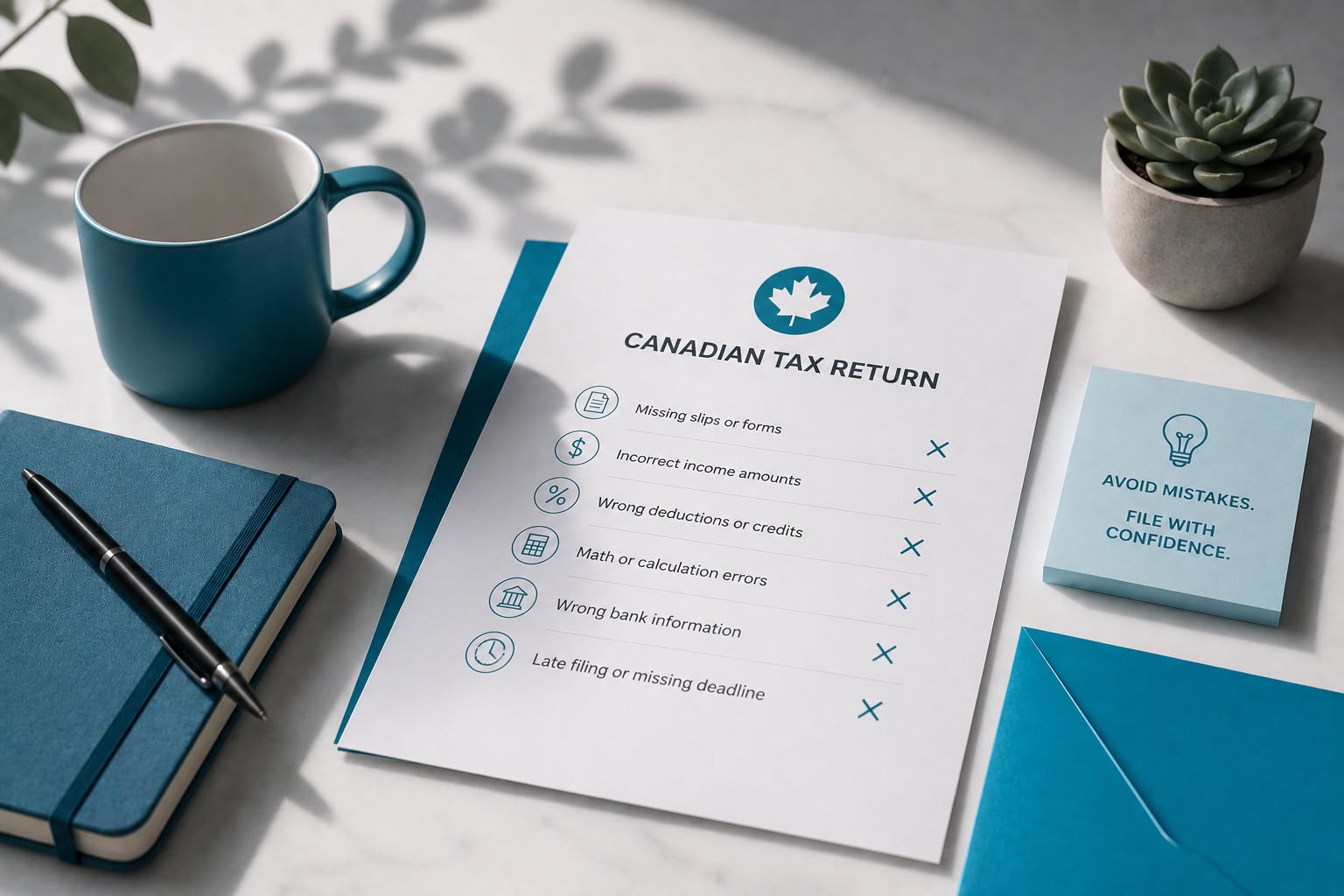
Common Tax Deadline Mistakes
Common mistakes include:
- Thinking self-employed taxpayers can pay on June 15
- Forgetting that corporate taxes may be due before the T2 filing deadline
- Missing GST/HST filing deadlines
- Missing payroll remittance deadlines
- Ignoring CRA instalment reminders
- Waiting until April to organize bookkeeping
- Forgetting T-slip filing deadlines
- Assuming no deadline matters if no tax is owing
- Not accounting for bank processing times when making payments
These mistakes are avoidable with a simple tax calendar and regular bookkeeping.
When Should You Get Help?
You should consider getting professional help if:
- You are self-employed
- You own an incorporated business
- You collect GST/HST
- You have employees or contractors
- You received an instalment reminder from CRA
- You are behind on filings
- You received a CRA notice or penalty
- Your income varies significantly from year to year
- You are unsure which deadlines apply to you
A missed deadline can often be more expensive than proper planning.
Final Thoughts
Canadian tax deadlines vary depending on whether you are an individual, self-employed taxpayer, corporation, GST/HST registrant, or employer.
The key is to know both your filing deadline and your payment deadline. In many cases, those dates are not the same.
Confectus can help individuals and business owners stay organized, meet CRA deadlines, and avoid unnecessary penalties, interest, and compliance issues.
Canadian tax questions? Get expert guidance.
Whether you’re an individual, self-employed, or a business owner, we provide clear advice to help you make informed tax decisions.

This article is intended for general informational purposes only and does not constitute tax, accounting, legal, financial, or professional advice. The information may not apply to your specific situation, and rules or guidance may change over time. You should consult a qualified professional advisor before making decisions or taking action based on this information.